
Foreword: A problem worth solving - EU|BIC Technical Note #12
How the EU|BIC community turns human-centric innovation from a policy into programmes that change people’s lives
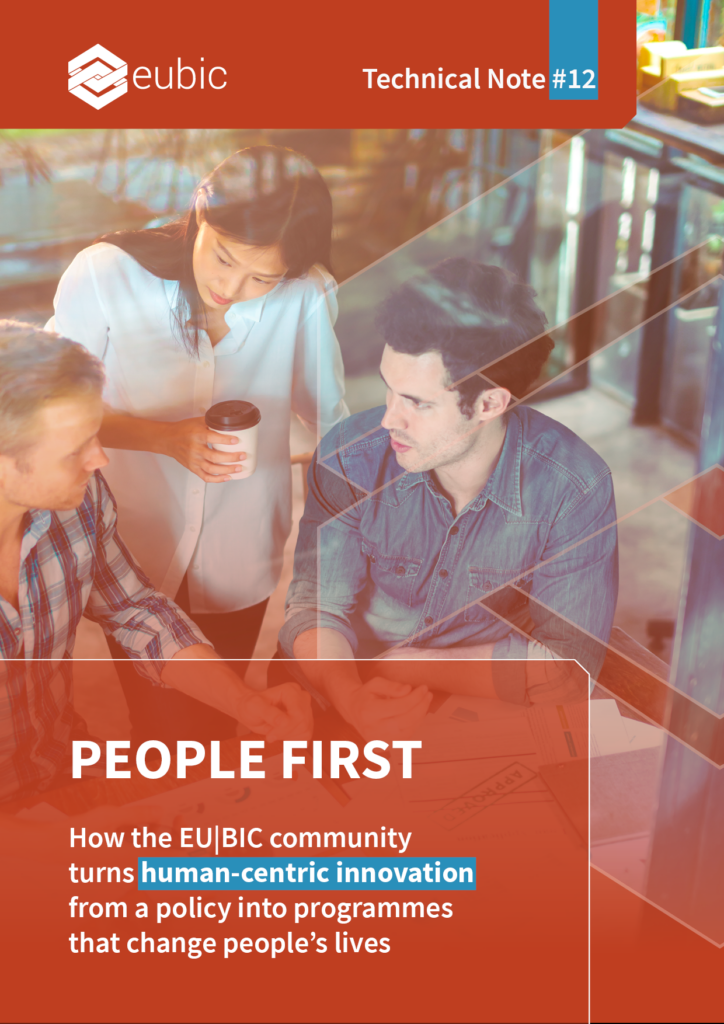
Download the Technical Note here
Foreword written by Laura Lecci, CEO, EBN (European Business and Innovation Centre Network).
Innovation is about people. It starts with people and responds to their needs, ambitions and problems. Over the years, I have seen many different interpretations of what “innovation” means. But the most convincing ones have something in common: they start from a problem that affects people, not from a technology that has become available.
This is one of the reasons I believe the conversation on human-centric innovation is at the heart of the EU|BIC community. It is deeply rooted in who we are.
For more than 40 years, EBN and the EU|BIC community have been close to the people who turn ideas into innovation. Every day, I witness our members working alongside entrepreneurs as they test assumptions, navigate uncertainty, find the right partners and understand the realities in which their solutions will be used. This proximity matters. It gives entrepreneurship support organisations a perspective that goes beyond technology or business models: an understanding of the people, companies and communities that ultimately give innovation its meaning and value.
This position gives EU|BICs a particular responsibility as technology and innovation evolve. Artificial intelligence, advanced robotics, digitalisation and other emerging technologies are transforming the way we live, work and innovate. The question for innovation support organisations is how we can help ensure that progress remains connected to people, purpose and real-world value.
This came into sharper focus through the collective reflection at the 2026 EBN Congress. Bringing our community together around human-centric innovation created space to step back and consider the broader role of the innovation ecosystem and, in particular, the role of the organisations that help shape it.
This technical note continues that reflection. The pages that follow bring together different voices from our community: EU|BICs, entrepreneurs and experts who are approaching this question from very different starting points. Their experiences do not offer one definition of human-centric innovation. Instead, they show why the question matters and why there is no single answer.
The innovation support programmes presented in this publication illustrate this diversity particularly well. Their work ranges from supporting senior and impact entrepreneurship, to attracting and retaining international talent, developing more inclusive approaches, growing applied AI and improving access to finance in rural communities. What connects these very different experiences is a commitment to addressing concrete human and societal needs through innovation.
The startups and entrepreneurs featured in this publication provide another perspective. Their solutions show that human-centricity should be embedded in the very starting point of an innovation journey: understanding a person’s needs, removing a barrier, improving quality of life, enabling participation or making technology more accessible and useful.
And the reflections from experts and practitioners remind us that this perspective must extend beyond the individual innovation. It concerns the environments in which innovation takes place: the relationships we build, the questions we ask entrepreneurs, the diversity of people involved in experimentation and co-creation, the capabilities we develop, and the ways in which we define and measure success.
For EU|BICs, this has practical implications. For them, this starts well before a product reaches the market. It is about asking who the solution is for, whose voice is missing, and whether the problem being solved is the right one. It is also about creating the space for entrepreneurs to test these questions, rather than assuming they already have the answers. It means creating connections between entrepreneurs, researchers, businesses, citizens, investors and public authorities. It means supporting innovation that responds to the realities of places and communities while creating opportunities to connect those solutions internationally.
It also means looking inward. As innovation support organisations increasingly use digital tools and artificial intelligence themselves, we need to consider how technology can strengthen, rather than weaken, the human relationships at the heart of our work. Our added value is not simply in providing information, programmes or infrastructure. It lies in our ability to connect people, build trust, facilitate collaboration and understand context.
This is perhaps where the EU|BIC community’s DNA matters most. Our community has always been built on the belief that innovation happens through connections. Connections between ideas and opportunities, entrepreneurs and markets, local ecosystems and international partners, technology and the people who give it purpose. Human-centric innovation asks us to make those connections even more intentional.
This note is therefore not intended to provide a definitive definition of human-centric innovation, nor a checklist for EU|BICs to follow. Instead, it offers a collection of experiences and reflections from within and around our community as an invitation to continue asking the right questions.
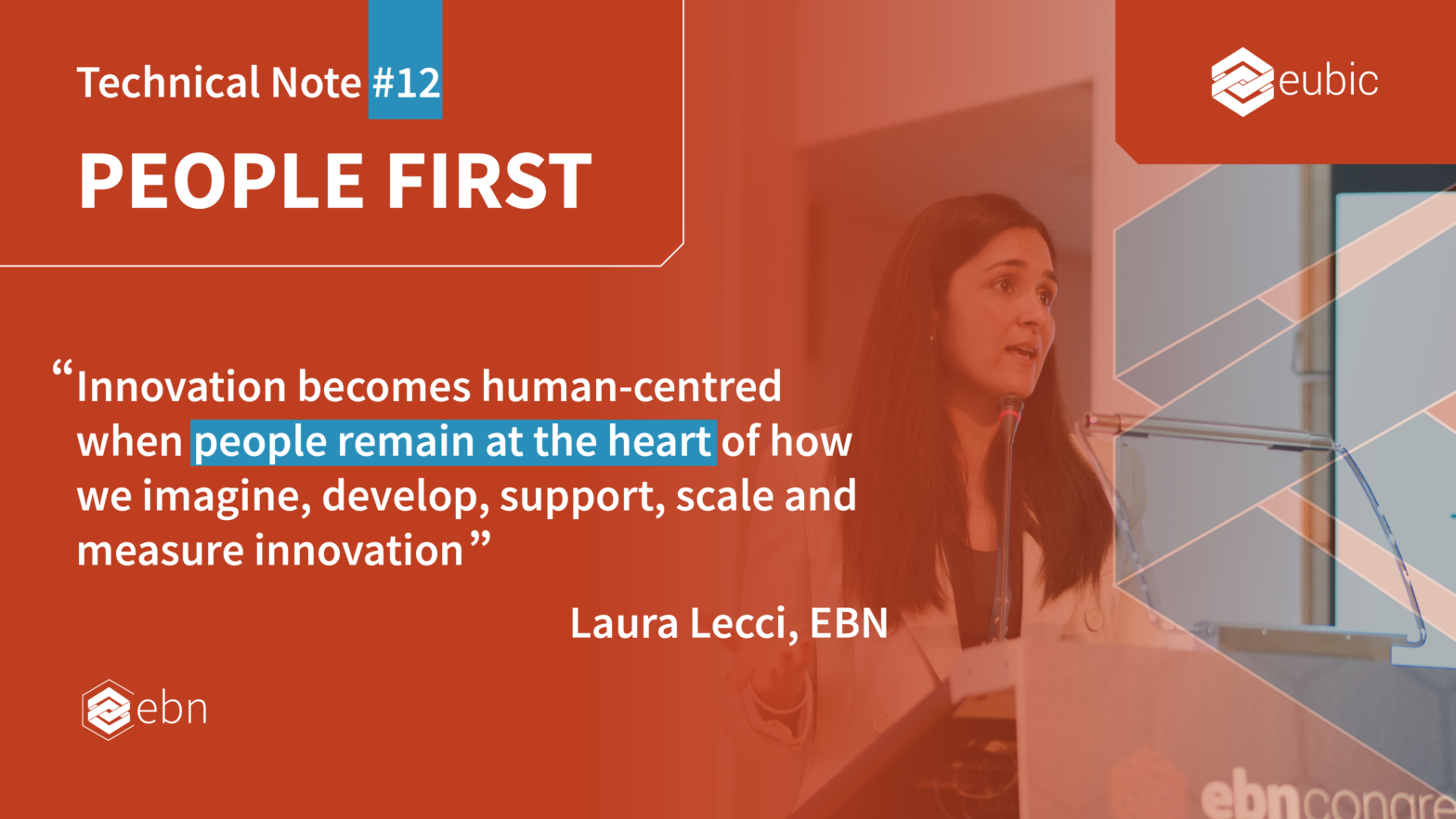
As technology becomes more powerful, our role is to help create the conditions in which technology and people can reinforce one another. Innovation becomes human-centred when people remain at the heart of how we imagine, develop, support, scale and measure innovation. That is the responsibility of innovators. And it is equally a responsibility for those of us who support them.
Share this post