
Human-centred innovation in practice: tools for innovation intermediaries - EU|BIC Technical Note #12
How the EU|BIC community turns human-centric innovation from a policy into programmes that change people’s lives
Download the Technical Note here
Contribution written by Karel Haegeman, Team Leader SHIFT, and Valentina Barsotti, Team SHIFT, Joint Research Centre (JRC), European Commission
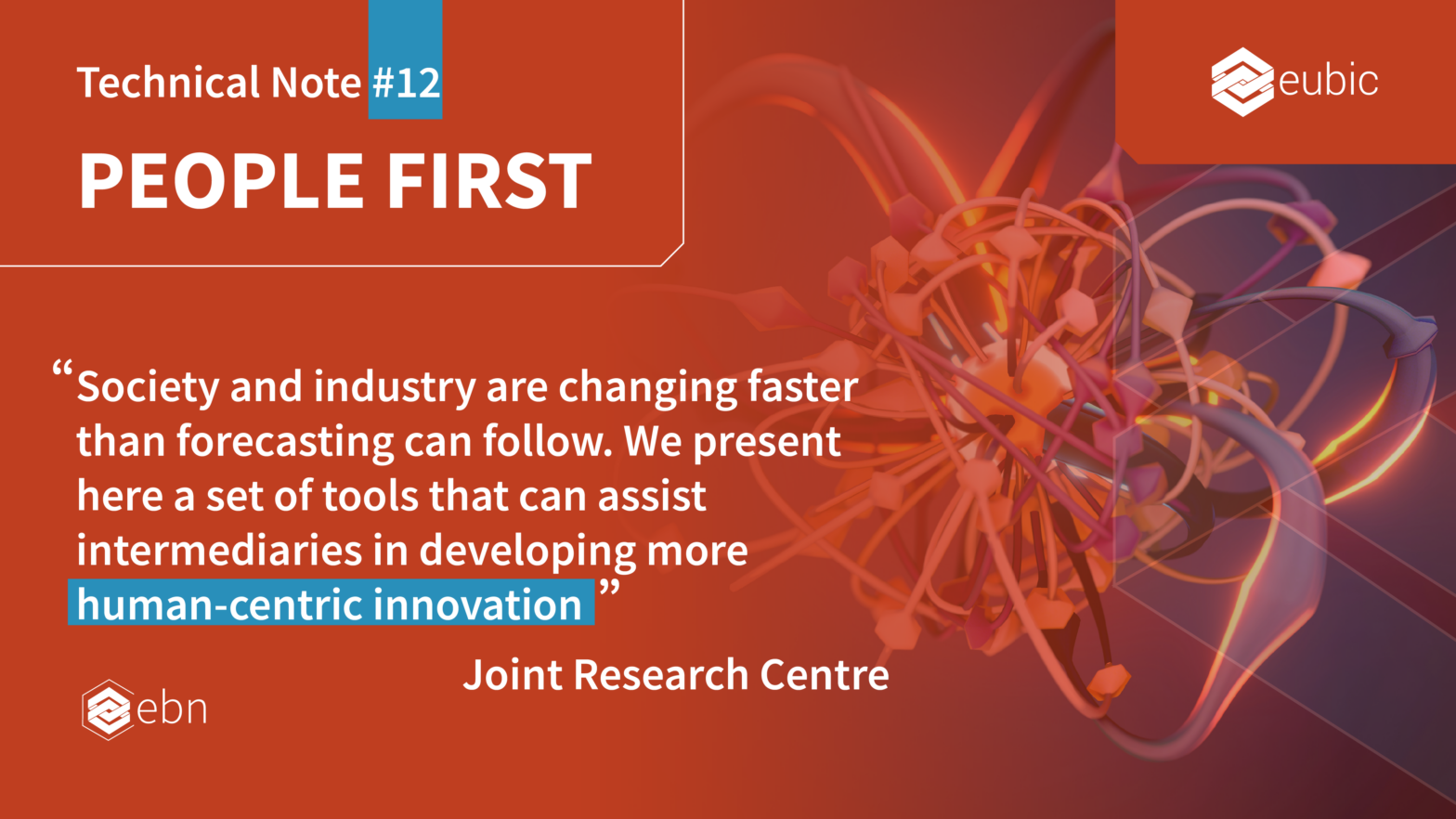
The rising interest in human-centred innovation also affects the role that innovation intermediaries play in innovation ecosystems. They are increasingly expected to operate as system stewards capable of orchestrating complex, multi-actor processes and embedding societal challenges into regional development pathways (Morisson and Pattinson, 2026). Examples of how actors implement human-centred innovation are a great source of inspiration but never serve as a manual for others to get started. In the SHIFT team of the Joint Research Centre’s Transforming Territories project, we translate concepts and practices from places, European projects and communities of practice into concrete guidance and actionable knowledge, allowing us to scale current practices across European territories, with a key focus on governance. They aim to support both “system stewards” and individual actors in creating a joint understanding and developing and implementing innovation strategies that support territorial competitiveness and a better life for the people. We present here a set of tools that can assist intermediaries in developing more human-centric innovation.
Foresight in practice for designing human-centric transition pathways
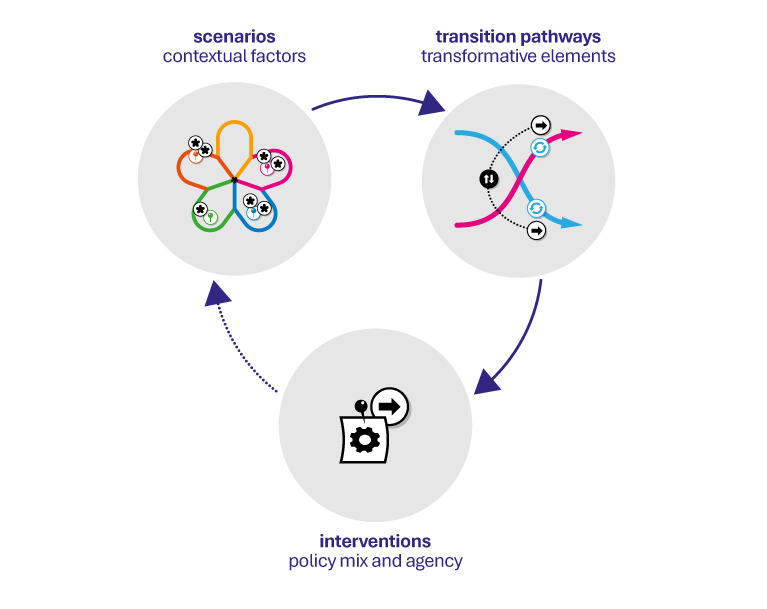
Society and industry are changing faster than forecasting can follow. This easy to use toolkit, co-created with the Industry 5.0 community of practice, the European Environment Agency, UNEP, the University of Chile and the Consejo Nacional de Ciencia, Tecnología e Innovación, helps intermediaries and practitioners design concrete transition pathways for transformative change. Its core tool, the X-Curve, captures systems change as the scaling up of sustainable innovations and the phasing out of old systems. A two-stage method moves from foresight techniques, such as scenario sensemaking and the futures wheel, to a coherent policy portfolio. Printable templates and six case studies make it actionable. They also come with thematic maps and scenarios.
In thematic horizon-scanning workshops, practical thematic maps are available for water resilience, the built environment and sustainable food systems. Using the FUTURINNOV methodology, they map drivers, enablers and barriers through STEEP factors and assess them against the Industry 5.0 pillars of human-centricity, sustainability and resilience. Their shared message is that technological readiness alone does not ensure systemic impact: co-creation, targeted upskilling, data sovereignty and harmonised regulation are also needed to avoid widening regional disparities. The posters serve as open sensemaking tools for future foresight cycles.
Intermediaries can reuse four scenarios for European industrial transformation up to 2040 to co-create transition strategies tailored to their region. One imagines a self-sufficient, fully circular EU. In a second, a fragmented EU pursues a just, green transition through local living labs. In a third, defence drives re-industrialisation and communities run circular economies. The fourth imagines an intensely competitive EU built around industry champions. Across all four, the same three pathways emerge: AI-driven education, local innovation ecosystems and harmonised policy frameworks.
Identifying opportunities for innovation
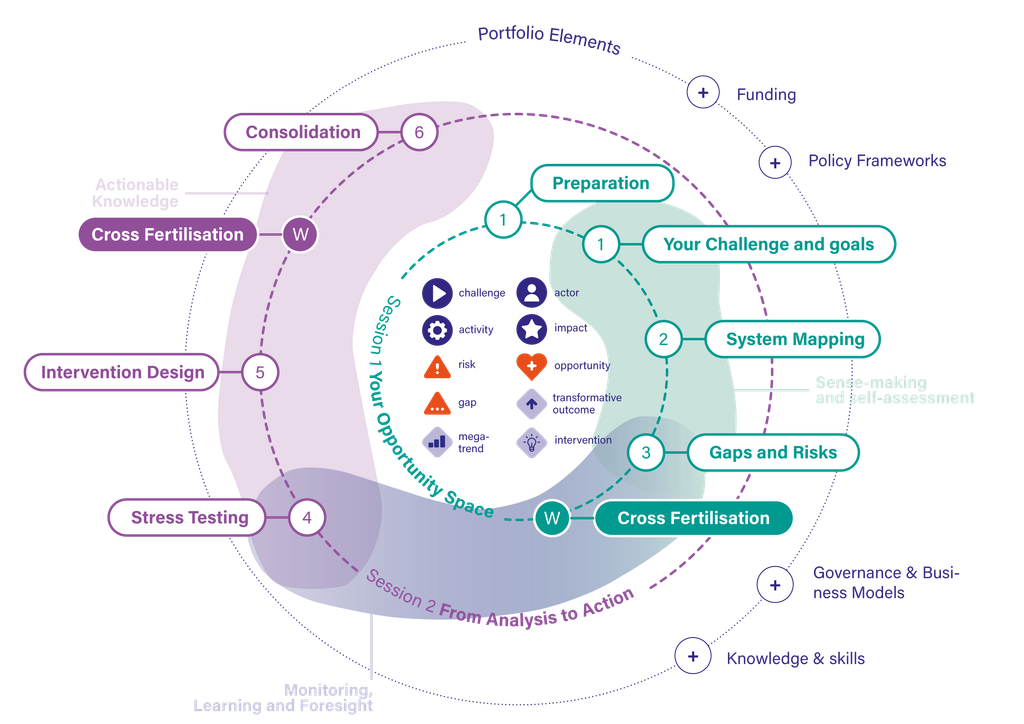
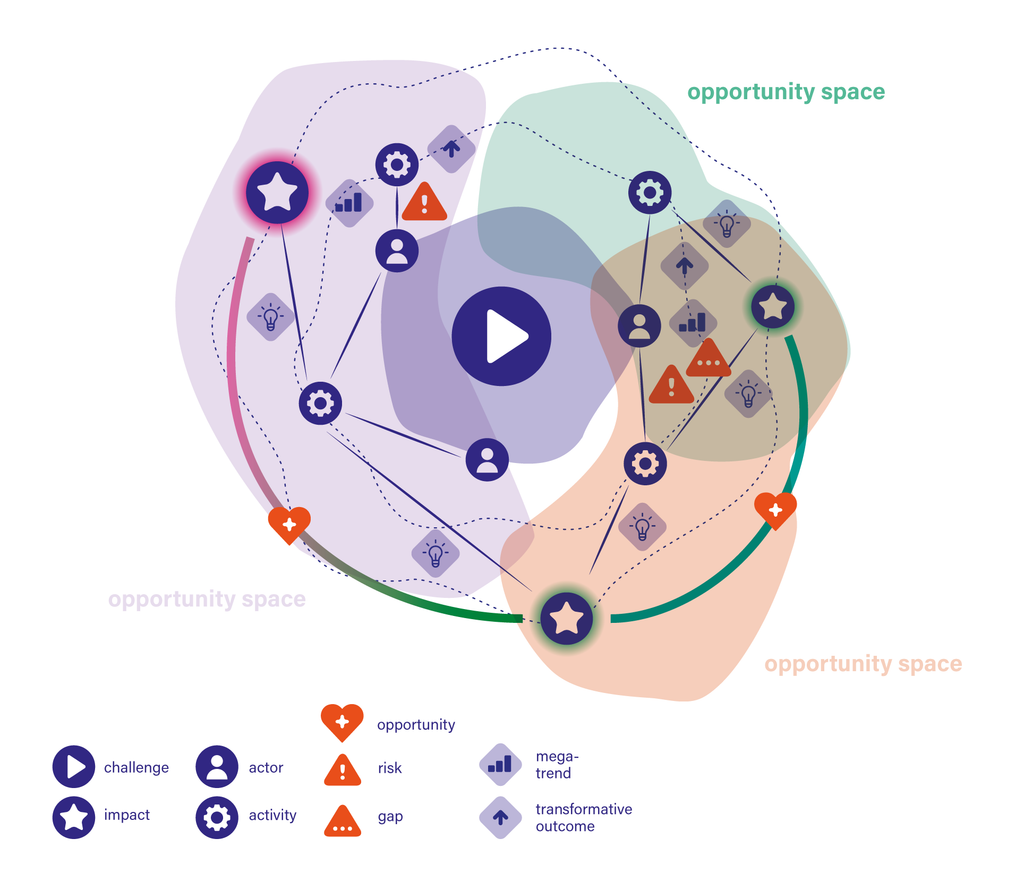
This practical guide helps places identify and activate opportunities at the intersection of innovation policy and related societal objectives. It offers a conceptual framework built on three dimensions, timing, place-based conditions and actor capacities, supporting an iterative process that connects different policy areas. A collection of real-world examples acts as a learning laboratory, spanning different maturity levels and focus areas, from horizontal governance to skills development. Originally designed for linking climate resilience and innovation, the tool can be used for navigating opportunities between departments, ministries and actors. A systems-thinking mapping tool supports both short workshops and longer processes, combining co-creation sessions with desk research to facilitate conversations on place-based challenges.
Governance mapping for Transformative Innovation
The cost of coordination is rarely taken into account. Designing a customised and well-functioning governance set-up is therefore paramount. This governance tool adopts a place-based approach for helping different government levels self-assess their potential to leverage innovation opportunities through a variety of policies. The resulting governance maps allow countries, regions, cities and municipalities to set up customised governance that balances governance complexity with the cost of coordination. Initially designed for identifying climate resilience opportunities, the tool is adaptable to other societal challenges including human-centric innovation.
Link: https://publications.jrc.ec.europa.eu/repository/handle/JRC145034
Learning and Assessment Tool for Industry 5.0
Inspired by the principles of Industry 5.0—human-centricity, sustainability, and resilience—this learning and evaluation tool helps companies reflect on how these values are embedded across their production processes. It supports individual companies in exploring their current practices in Industry 5.0, identifying areas for improvement, and aligning their strategies with impact-driven and future-ready business models. The tool also supports education, training, and capacity-building initiatives for companies and regional innovation ecosystems. It was developed in collaboration with the Industry 5.0 Community of Practice, the European Commission (DG RTD and JRC), Ingenjör5.0 and Chalmers University of Technology.
Link: https://industry50tool.com/
Share this post